
Hypnotherapy
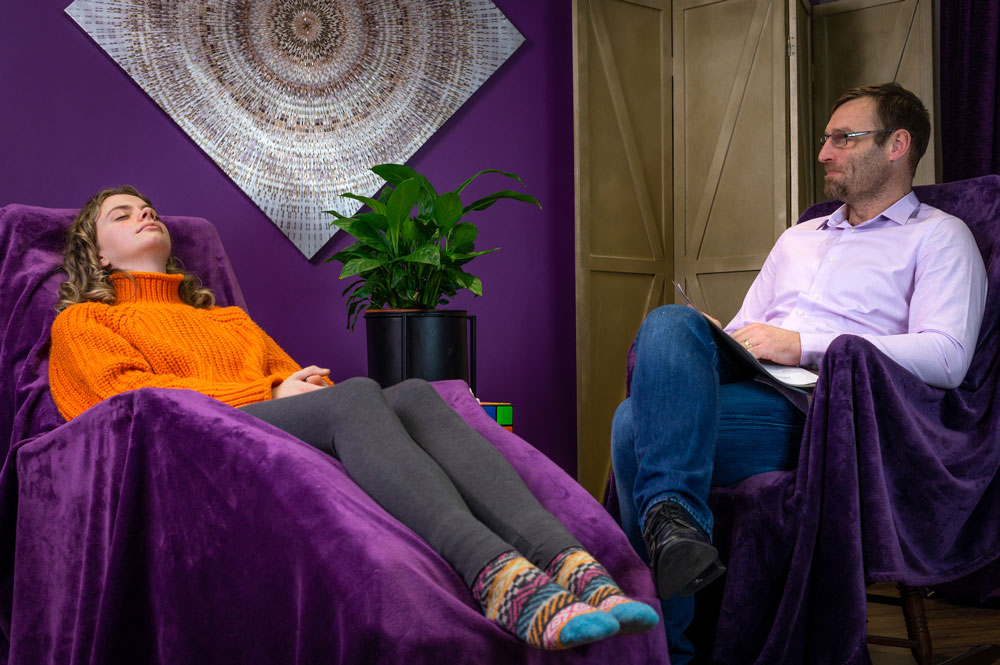
No one knows for certain where the practice of hypnosis came from. However, records show that it was being practiced in the nineteenth century by the likes of Sigmund Freud, Dr Ivan Pavlov, Emile Coue, as well as many others. Then in the twentieth century it was used extensively by Milton Erickson, his research formed the basis of hypnotherapy we know today. Erickson was and still is probably the most famous man in the world of hypnotherapy.
Contrary to popular belief, hypnosis is not a state of deep sleep, or a trance-like condition where an individual loses control and can be made to do something they ordinarily would not. Hypnosis is not the same as sleep; you are still awake, aware and in full control at all times. It is not a magic cure that works without any effort on your behalf. The most important thing is that you WANT to change the behavioural habit, issue or addiction, and that you are highly motivated to do so. You have to WANT the treatment to work and a good rapport with the therapist must be established in order for it to do so.
During hypnosis, you are sat comfortably and guided into a deep state of relaxation, very similar to when meditating. Once in this state, your subconscious mind becomes very alert. The conscious mind is put to rest, or encouraged to take a back seat, if you like. This is important as your conscious mind is responsible for your critical thinking, and often prevents you from making positive changes that you want to make. Once in this state, your subconscious mind is very receptive to receiving new thoughts and information that are positive in content and, reframing your thinking and behavioural patterns for the better. The process lasts approximately 1 hour.
A consultation is conducted before any hypnotherapy can take place; it will last approximately 30 minutes, depending on your individual needs. The aim is to provide an opportunity for us to get to know one another, for you to become familiar with the surroundings and a chance to obtain as much information about you and your situation as possible. This is so we can best understand how your mind has created your specific issue. During the consultation, we will discuss any concerns you have, and your goals and expectations
How effective is Hypnotherapy?
According to Dr Hilary Jones in ‘Doctor, what’s the Alternative?’ (1988), hypnotherapy can be applied to many psychological, emotional, and physical disorders. It is used to relieve pain in surgery and dentistry, and has proved to be of benefit in obstetrics. It can shorten the delivery stage of labour and reduce the need for pain killers. It can ease the suffering of people with chronic conditions and disabilities, and those facing terminal illness. It has been shown to help people overcome addictions such as smoking and alcoholism and to help with disorders such as bulimia. Children are generally easy to hypnotise and can be helped with nocturnal enuresis (bed-wetting) and chronic asthma, whilst teenagers can conquer stammering or blushing problems which can otherwise make their lives a misery. Phobias of all kinds lend themselves well to hypnotherapy, and anyone suffering panic attacks or OCD, and other stress-related problems like insomnia may benefit. Conditions exaggerated by tension, such as IBS, psoriasis and eczema, and excessive sweating, all respond well; even tinnitus and clicky-jaws can be treated by these techniques.
In 1970 Dr Alfred A. Barrios conducted studies that compared the effectiveness of achieving long-term positive changes for different types of therapy. His analysis showed that:
- 93% of cases achieved long-term positive changes after 6 sessions of hypnotherapy
- 72% of subjects achieved long-term positive changes after 22 sessions of Cognitive Behavioural Therapy
- only 38% of people achieved long-term positive changes after 600 sessions of classical psychotherapy.
According to world-renowned research and publications, hypnotherapy is much more effective than the classical methods of treatment. It is especially effective in cases such as:
Anxiety, smoking, obesity, migraines, postoperative recovery, headache, and anxiety, burn pain, phantom limb pain, acute and chronic pain, drug addiction, low self-esteem, decreased libido, anger, regeneration after fractures and operation